Blog post
Menengiç coffee: the caffeine-free terebinth drink from Gaziantep
Menengiç coffee is a hot drink from southeastern Turkey made from the roasted, ground fruit of the terebinth tree, a wild relative of the pistachio. It contains no coffee beans, and published sources describe it as caffeine-free. It is sold as an oily paste and brewed in a cezve with milk or water.
By Ahmet Kırtok · Updated November 26, 2026 · 5 min read
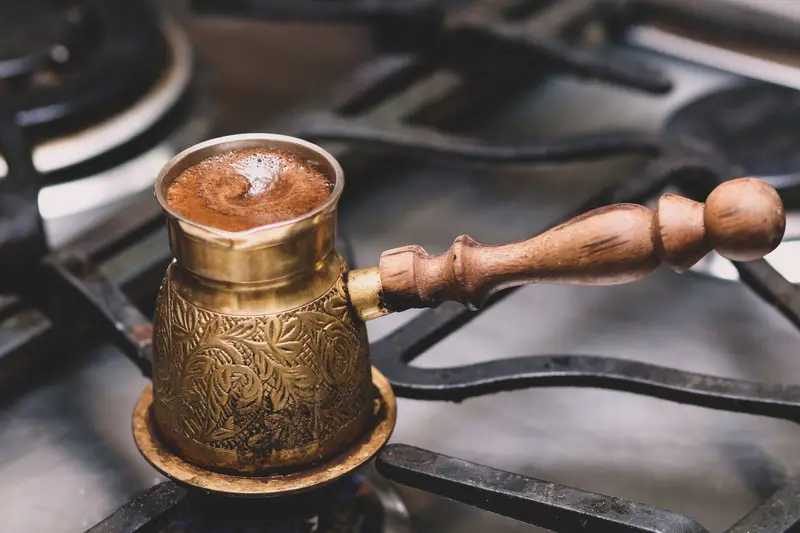
What is menengiç coffee made of?
It is made from one ingredient: the small fruit of Pistacia terebinthus, known in English as terebinth or turpentine tree. In Turkey the fruit is called menengiç (meh-nen-GEETCH), sometimes melengiç. The fruits are dried, roasted until brown and ground into a thick paste.
The tree is in the same genus as the pistachio, Pistacia, and news reports and the EU's delegation to Türkiye call it a wild pistachio tree. A 2023 survey of Turkey's local coffees in the Journal of Ethnic Foods records two regional names for the drink, bıttım in Siirt and cedene in Elazığ, and one news report says it is known as gazwan in northern Iraq.
"Coffee" in the name refers to how it is prepared and served: brewed in a small pot and poured into a small cup. The European Union's own registration document classifies it as a coffee substitute.
Is menengiç coffee really caffeine-free?
It contains no coffee, and terebinth is a different plant. The 2023 Journal of Ethnic Foods survey says menengiç coffee does not contain caffeine, and the EU's delegation to Türkiye calls it a caffeine-free alternative to coffee. We did not find a published laboratory analysis, and the EU product specification lists oil, protein and sugar content without mentioning caffeine.
One check is worth making before you rely on that. A product or a coffee shop drink with menengiç in its name can be a blend that also contains coffee, as can flavored mixes sold under other names (see our post on dibek coffee). If avoiding caffeine matters to you, buy a product whose only ingredient is terebinth, and ask at a coffee shop how theirs is made.
For caffeine in the real thing, see our Turkish coffee caffeine guide.
What does menengiç coffee taste like?
Reports describe it as nutty and slightly bitter, with a creamy texture, especially when it is made with milk. The EU specification mentions a mild pistachio flavor and scent. The fruit is rich in oil, between 44 and 56 percent by the specification, which accounts for the full body.
Expect something closer to a warm nut milk than to coffee. People who come to it expecting espresso bitterness are usually surprised.
How do you make menengiç coffee at home?
Stir the paste into cold milk or water in a cezve, heat it slowly while stirring, and pour it when it foams. The method is close to Turkish coffee, with two differences: you stir throughout so the oily paste dissolves, and milk is a common choice of liquid.
- Stir the jar first. An oil layer on top is normal, and the EU specification notes that producers mix the paste until even before use.
- Put the paste in a cezve (JEZ-veh), the small pot also called an ibrik. Use the amount your jar recommends for one cup.
- Add one small cup of cold milk or water and stir until the paste loosens.
- Add sugar now if you want it.
- Heat gently, stirring, until foam rises. Do not let it boil over.
- Pour and serve. There is very little sediment compared with Turkish coffee.
As one sourced starting point, the 2023 survey records a recipe from Elazığ: two teaspoons (about 10 g) of ground terebinth to one small cup (65 to 80 g) of water or milk, with two teaspoons of sugar if wanted.
If you do not own a cezve, any small saucepan works for this drink. Our cezve guide explains sizes and materials.
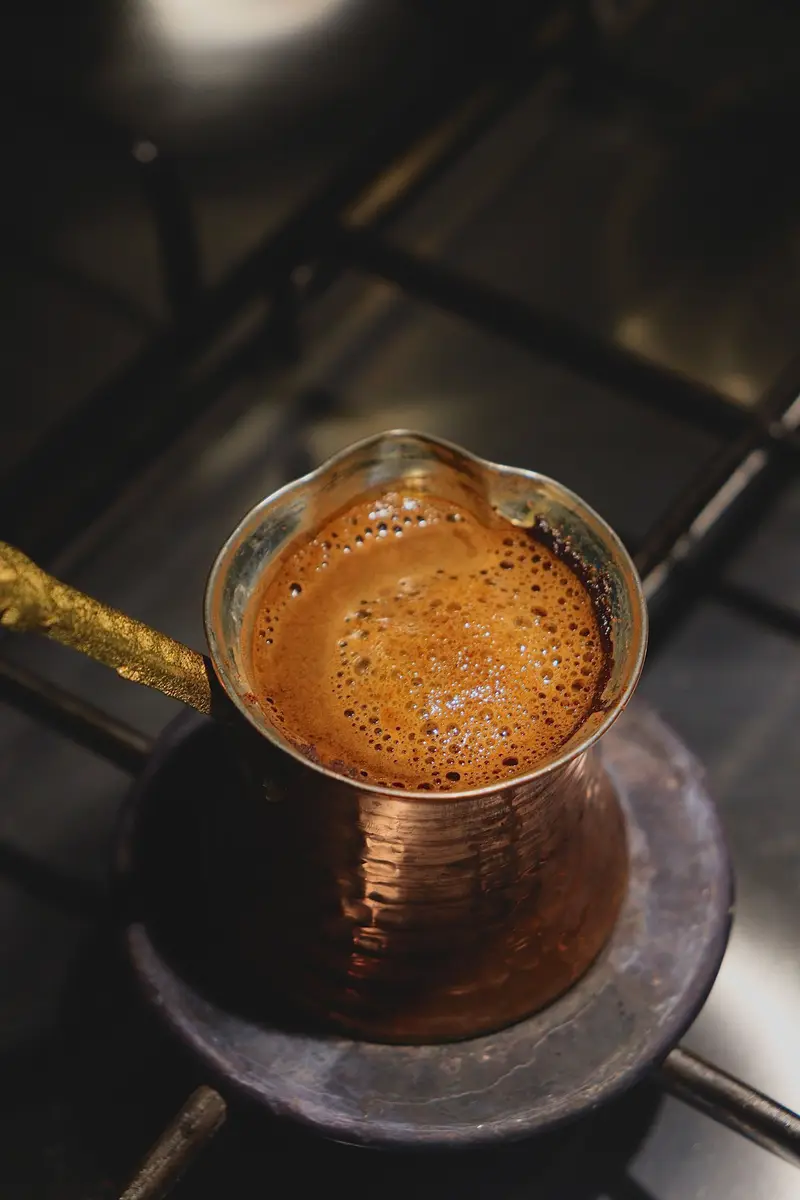
Where does menengiç coffee come from?
It is most closely tied to Gaziantep, in southeastern Turkey, and the 2023 survey also records it in Siirt, Şanlıurfa, Kahramanmaraş and Elazığ. The EU specification describes the trees growing on rocky ground at about 2,000 to 4,900 feet (600 to 1,500 meters) above sea level in Gaziantep province.
On December 2, 2024, Turkish authorities announced that "Gaziantep Menengiç Kahvesi" had been registered by the European Union, the 29th Turkish product to gain EU geographical indication status. The registration is a Protected Designation of Origin, number PDO-TR-02661. Under it, the growing, harvesting, cleaning, roasting and grinding must all take place in Gaziantep province, and no additives are allowed.
| Fact | Detail |
|---|---|
| Plant | Pistacia terebinthus (terebinth) |
| Form sold | Roasted, ground paste |
| EU status | Protected Designation of Origin, PDO-TR-02661 |
| Announced | December 2, 2024 |
| Additives under the PDO | None permitted |
| Oil content (specification) | 44 to 56% |
News reports sometimes describe the fruit as unroasted. The EU specification is the authority here, and it lists roasting as a required step, with a warning that over-roasting makes the product bitter.
Who should be careful with menengiç coffee?
Anyone with a tree nut allergy, particularly to pistachio, should speak with a doctor before trying it. Terebinth belongs to the same genus as the pistachio. We are not offering medical advice, and we have not seen research on how often people with these allergies react to terebinth.
You will also find health claims attached to the drink, from antioxidant content to relief during winter colds. One news report notes that research on the fruit is still limited. We leave those claims out.
Can you find menengiç coffee in the United States?
Yes, mainly as jars of paste in Turkish and Middle Eastern grocery stores and from online sellers. It appears on some coffee shop menus, though not often. Look for "menengiç," "melengiç" or "terebinth" on the label, and check that the product is pure if caffeine is your concern.
Our directory lists places by evidence that they serve cezve-brewed coffee. Menengiç is noted only where a place's own menu confirms it. Browse our map, or read about mırra, another specialty from the same part of Turkey that sits at the opposite end of the scale: strong, bitter and very much coffee.
Sources
- Official Journal of the EU, C/2024/4505: Gaziantep Menengiç Kahvesi, PDO-TR-02661 (product specification)
- Turkish Patent and Trademark Office: Gaziantep Menengiç Kahvesi registered in the EU (December 2, 2024)
- Türkiye Today: Gaziantep's menengiç coffee offers caffeine-free alternative
- Daily Sabah: Türkiye's menengiç coffee secures EU geographical indication
- Hürriyet Daily News: Gaziantep's menengiç coffee earns EU geographical indication
- Demir, Y. and Bertan, S. (2023), Spatial distribution of Türkiye's local Turkish coffee kinds, Journal of Ethnic Foods 10:32
- EU Delegation to Türkiye (EEAS): Taste of heritage, Gaziantep's iconic tastes secure EU protection (PDO, 2024; caffeine-free; roasted)