Blog post
Can you reheat Turkish coffee? And other things people ask after the first cup
You can reheat Turkish coffee, but it will not taste the same: the foam does not come back, and the grounds in the pot keep extracting, so the second heating is more bitter. Brew only what you will drink. Store the dry coffee airtight and use it within a week or two of opening.
By Ahmet Kırtok · Updated November 26, 2026 · 6 min read

Can you reheat Turkish coffee?
Yes, in the sense that nothing stops you, and no, if you want it to taste as it did. Turkish coffee is unfiltered. The grounds stay in the liquid, so coffee left sitting keeps extracting, and heating it again pushes that further toward bitterness.
Two things are lost for good:
- The foam. The layer of köpük (kuh-PUEK) forms once, during the first slow rise. Reheating does not rebuild it. Our foam guide explains why.
- The balance. A fresh cup is poured at the moment the brew is ready. A reheated one has gone past it.
If you still want to rescue a cup that went cold, warm it gently and do not let it boil. Pour the liquid off the settled grounds into a clean pot first, which limits further extraction. Expect a flat, stronger-tasting drink.
A better habit is to brew small. A cezve (JEZ-veh), the pot many English speakers call an ibrik, sized for one or two cups takes only a few minutes, so making a fresh one costs little. The cezve guide covers sizes.
Can you save leftover Turkish coffee for later?
You can keep it for a few hours, but there is little reason to. Flavor falls off quickly once the coffee cools on its grounds. For safety, one widely cited consumer guide suggests plain black coffee is likely fine for about 4 hours at room temperature and 3 to 4 days sealed in the refrigerator.
That same guide is candid that there is little formal research on how long brewed coffee keeps, so treat those numbers as cautious rules of thumb. If the coffee has milk in it, the limits are shorter: about 2 hours at room temperature.
If you do keep some, pour it off the grounds into a clean, covered container first. Cold leftover coffee is better used as an ingredient, in a dessert or a marinade, than drunk as a second cup.
How should you store ground Turkish coffee?
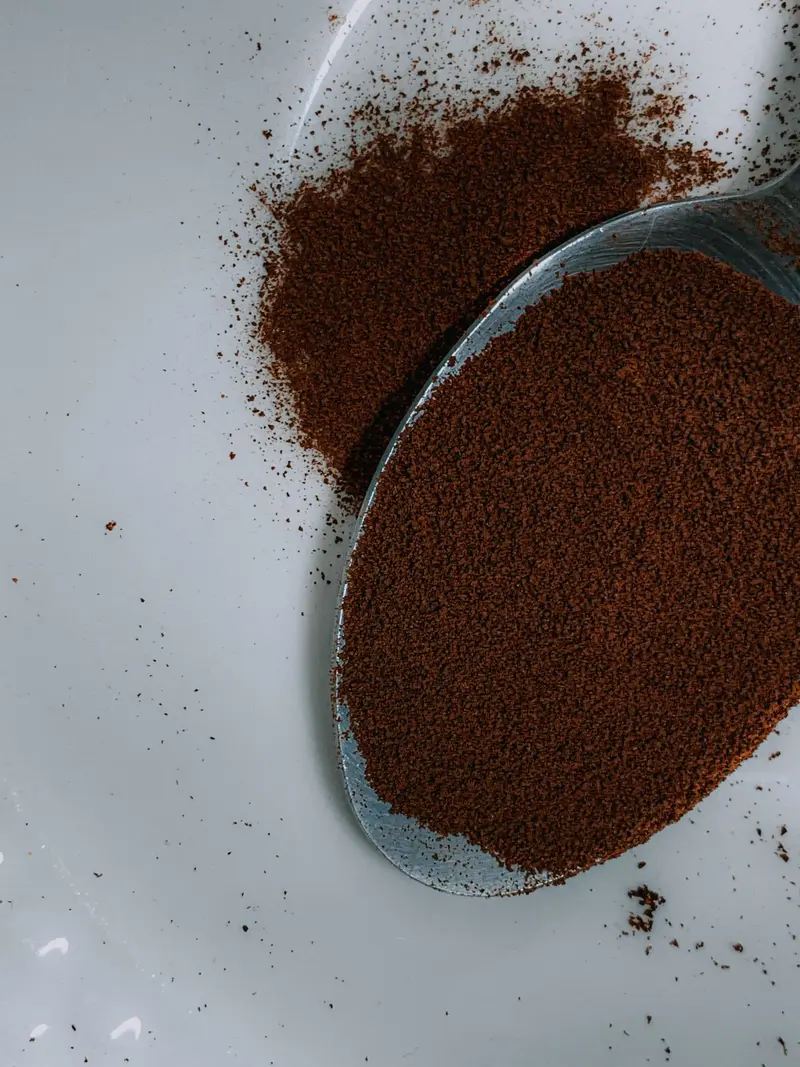
Keep it in an opaque, airtight container in a cool, dark cupboard, and buy small amounts often. The National Coffee Association names four things that damage coffee: air, moisture, heat and light. Its guidance is that ground coffee stays fresh for about one to two weeks at room temperature.
Turkish coffee is ground finer than any other style, which means far more surface is exposed to air. It goes stale faster than a coarser grind, so the guidance matters more here.
| Do | Avoid |
|---|---|
| Move coffee from its bag into an airtight, opaque container | Clear jars on a sunny counter |
| Store in a cool, dark cupboard | Shelves near the stove, oven or dishwasher |
| Buy enough for one to two weeks | Large bags that sit open for a month |
| Grind just before brewing, if you own a suitable grinder | Leaving the bag open between uses |
Vacuum-sealed tins and bricks keep well until opened. The clock starts when you break the seal. For help choosing what to buy, see the best coffee for Turkish coffee, and for grinding your own, the grind guide.
Should you keep Turkish coffee in the fridge or freezer?
Generally no for the refrigerator, and only with care for the freezer. The National Coffee Association notes that opinions differ, because coffee absorbs moisture and odors. If you freeze it, use a truly airtight container and take out about a week's supply at a time.
The risk with cold storage is condensation. Each time a cold container is opened in a warm kitchen, moisture settles on the coffee. With a powder-fine grind, that can cause clumping as well as flavor loss. If you bought more than you can use in two weeks, divide it into small sealed portions, freeze them, and thaw each one once.
Can you reuse Turkish coffee grounds for a second cup?
No. The first brew takes what the coffee has to give, and a second pass over the same grounds produces thin, bitter water with no foam. Use fresh coffee for every pot.
What can you do with used Turkish coffee grounds?
Compost them, work a little into garden soil, or read them. Those are the uses we can stand behind. Grounds are a useful compost ingredient, and Oregon State University's Extension Service gives specific limits for how much to use.
In compost. The Extension Service says coffee grounds contain about 1 to 2 percent nitrogen and should make up no more than 20 percent of a compost pile by volume. Its suggested mix is three parts leaves, one part fresh grass clippings and one part grounds.
In soil. The same source says to work in about half an inch of grounds to a depth of 4 inches, and warns that too much applied directly can inhibit seed germination or slow plant growth. It also corrects a common belief: used grounds are close to neutral, with a pH of about 6.5 to 6.8, so they will not acidify your soil in any lasting way.
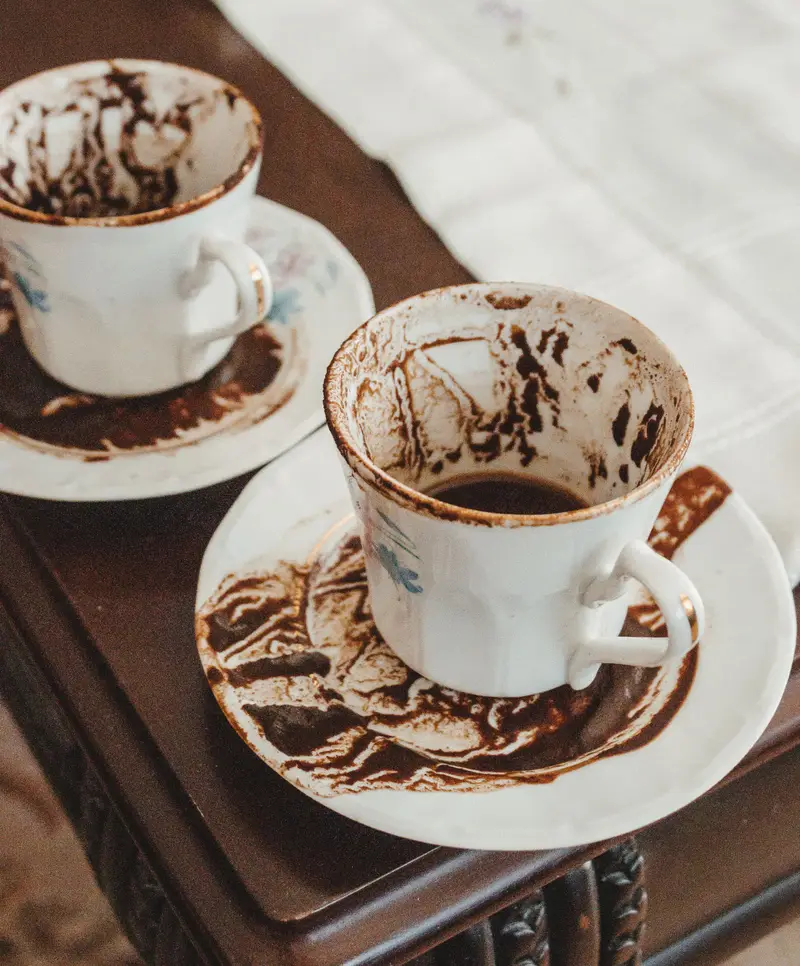
In the cup. In the fortune-reading custom, the cup is turned over on its saucer and the patterns left by the telve (TEL-veh), the grounds, are interpreted. Our fortune-telling guide explains how it is done.
You will find many other suggested uses online, from skin scrubs to deodorizers. We have not found reliable sources for most of them and leave them out.
Can you pour Turkish coffee grounds down the sink?
No. Plumbers advise against it. Coffee grounds clump together in water instead of breaking down, and can build up in pipes and cause clogs. The same advice applies to garbage disposals.
Turkish coffee makes this easy to get wrong, because the grounds are in the cup and in the pot when you wash up. A simple routine:
- Let the cup and the cezve stand until the grounds settle.
- Pour off the clear liquid.
- Wipe or spoon the sludge into the trash or a compost container.
- Then wash.
How do you clean a cezve after brewing?
Empty the grounds as above, then wash by hand with warm water and a soft sponge, and dry it right away. Avoid abrasive pads on tin-lined copper, since the lining is thin. Check the maker's instructions before putting any cezve in a dishwasher.
Materials differ in the care they need, and the cezve guide goes through each one. When you are ready to brew the next pot fresh, the method is in how to make Turkish coffee. And if you would like someone else to do the brewing and the washing up, our map lists verified places across the United States.
Sources
- National Coffee Association (aboutcoffee.org): Storage and shelf life
- Healthline: How long does coffee last? (brewed coffee; notes limited research)
- Oregon State University Extension Service: Coffee grounds boost soil health and help control slugs
- Mr. Rooter Plumbing: Can you put coffee grounds down the sink?