Guide
Best coffee for Turkish coffee: beans, roast and how to buy fresh
The best coffee for Turkish coffee is fresh arabica, roasted medium and ground to a flour-like powder. Any good coffee can be brewed this way, since Turkish coffee is a method and not a bean. Brazilian arabica is the customary base in Turkey, and freshness matters more than origin.
By Ahmet Kırtok · Updated November 26, 2026 · 10 min read
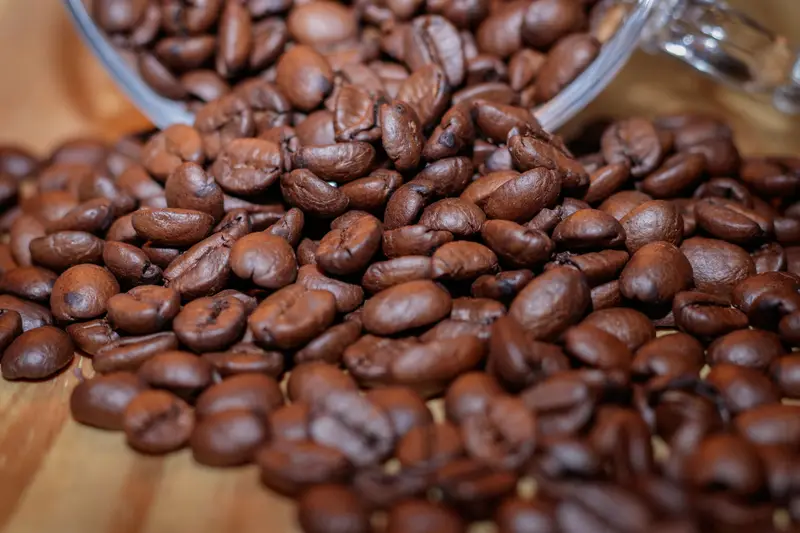
No coffee plant grows commercially in Turkey. The coffee in a Turkish cup has always been imported, and "Turkish coffee" on a label describes how the beans were roasted and ground and how they are meant to be brewed. That is good news for a US buyer, because it means you have two workable routes: buy coffee made for the purpose by a Turkish, Greek or Middle Eastern roaster, or have a local roaster grind fresh beans to Turkish fineness.
What kind of coffee is used for Turkish coffee?
Traditional Turkish coffee uses arabica beans, usually a blend, roasted to a medium level and milled to powder. Kurukahveci Mehmet Efendi, the best-known Istanbul roaster, describes its coffee as blended arabica from Central and South America. Robusta is traditionally not part of the classic profile.
That description comes from the company's own definition of Turkish coffee. A 2023 academic survey of Turkey's regional coffee styles likewise names arabica as the bean Turkish coffee calls for.
The style favors coffees that are low in sharp acidity, with a round body and flavors on the nutty, chocolate and caramel side. The reason is the method. Because the grounds stay in the cup and nothing is filtered out, body and bitterness are amplified, and a coffee that is balanced as drip can taste heavy or harsh when brewed this way.
Why is Brazilian coffee so common in Turkish coffee?
Brazil supplies most of Turkey's coffee. A 2025 report by Brazil's agricultural attaché in Ankara states that Brazil is the origin of 80 percent of the coffee beans Turkey imports. Brazilian arabica also suits the style: it tends toward low acidity, a full body and nutty sweetness.
The report, published by Brazil's agriculture ministry in March 2025, goes as far as saying it would be no exaggeration to call traditional Turkish coffee Brazilian as well. Researchers treat that pairing as the default too. When food scientists at Akdeniz University studied Turkish coffee in 2022, they used Brazilian arabica, roasted medium.
It was not always so. The Ottoman world first drank coffee shipped from Yemen, and Brazilian beans took over much later. Our history of Turkish coffee covers the Yemeni beginnings. The practical point for today: if you want the familiar taste of a cup in Istanbul, a Brazilian arabica or a Brazil-based blend is the closest starting point.
What roast level is best for Turkish coffee?
Medium roast is the traditional choice and the safest one. It keeps enough sweetness and aroma to balance the method's heavy extraction. Dark roasts turn bitter easily in a cezve. Light roasts can be excellent but need careful technique, and they taste noticeably more acidic than the classic cup.
| Roast | In the cup | Good for | Watch out for |
|---|---|---|---|
| Light | Bright, fruity or floral, lighter body | Specialty single origins, drunk without sugar | Sourness if under-extracted. Needs a precise grind and timing. |
| Medium | Balanced, nutty, chocolate, caramel, full body | The classic profile, with or without sugar | Few risks. This is the default. |
| Medium-dark | Heavier, bittersweet, smoky edge | People who take it sweet (orta or şekerli) | Bitterness if it boils |
| Dark | Bitter, roasty, thin aroma | Some regional styles, by intent | Easily harsh. Not recommended for a first attempt. |
The Akdeniz University study describes medium roast, with beans roasted at 185 to 200 °C for 15 minutes, as suited to Turkish coffee. Specialty brewers lean lighter: the recipe by 2013 World Cezve/Ibrik Champion Turgay Yıldızlı in Fresh Cup calls for light to medium roasts and warns that darker roasts can over-extract and become overwhelmingly bitter.
Some Turkish regional styles do go dark on purpose. The Journal of Ethnic Foods survey records local styles that use a dark or double roast, for example in Adana and Mardin. Those are distinct local traditions with their own preparation. For standard Turkish coffee, medium is the place to begin.
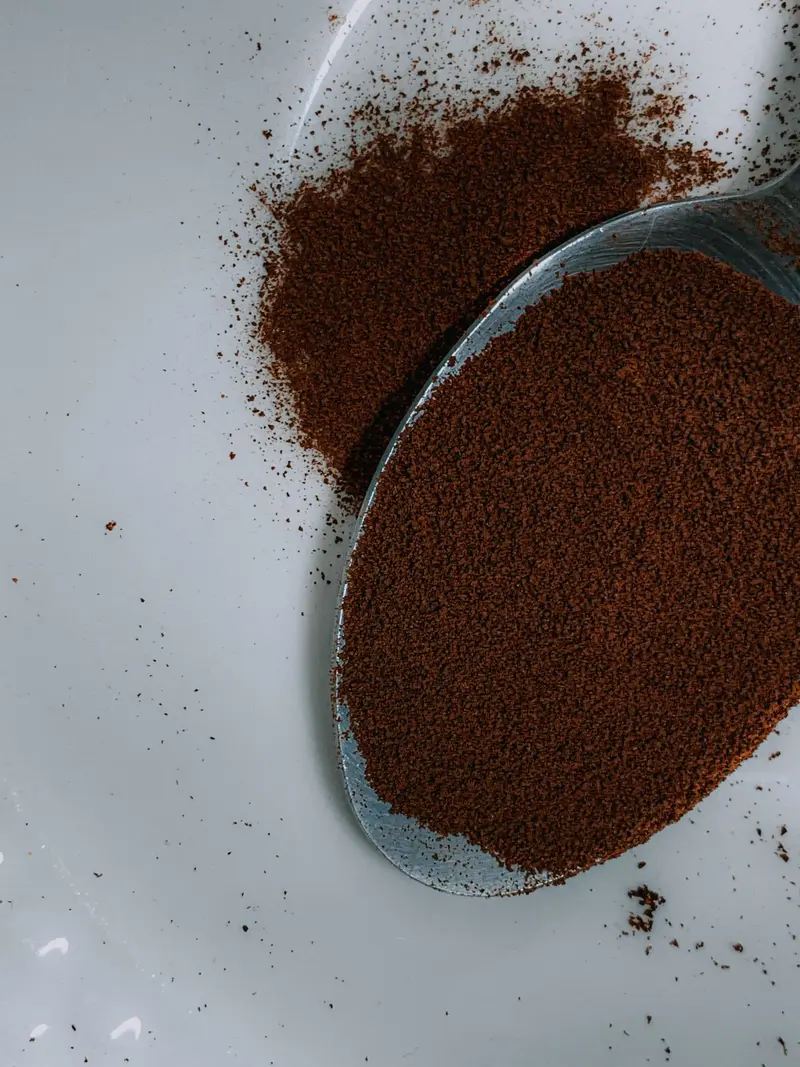
Can you use any coffee beans for Turkish coffee?
Yes, as long as they are ground finely enough. Any roasted coffee milled to Turkish fineness can be brewed in a cezve. The limit is practical: flavored, oily or very dark coffees tend to give poor results, and most pre-ground supermarket coffee is far too coarse.
Some combinations work better than others:
- Single-origin Brazil, Colombia, Guatemala or similar, medium roast. Close to the traditional profile and widely available from US roasters.
- Natural-process Ethiopian or Yemeni coffee, light to medium. Fruity and aromatic. A favorite of specialty cezve brewers, and a nod to where the Ottoman coffee trade began.
- Espresso blends. Often workable if the roast is not too dark, provided they are reground to Turkish fineness. Espresso grind itself is too coarse. See the grind guide.
- Robusta-heavy blends. Usually more bitter, with more caffeine. Not part of the classic Turkish profile.
- Decaf. Works the same way. Buy it as fresh as you can, since decaf can sit on the shelf longer.
Which Turkish roasters have the longest history?
The roaster with the best-documented long history is Kurukahveci Mehmet Efendi of Istanbul, which dates its business to 1871. We mention it as historical context. It is one of many roasters, and age alone says nothing about how fresh a given pack will be when it reaches a US shelf.
According to the company's own history, Mehmet Efendi took over his father's spice shop in Istanbul in 1871 and began roasting and grinding coffee for customers on the spot, at a time when coffee was usually sold as green beans to be roasted at home. Kurukahveci (koo-roo-kah-veh-JEE) means, roughly, a seller of roasted and ground coffee, and the company renders it in English as "coffee roaster." That shift, from home roasting to buying coffee ready for the pot, shaped how Turkish coffee is sold to this day.
Other Turkish roasters and neighborhood kurukahveci shops also have long histories, along with Greek, Armenian, Lebanese, Bosnian and other roasters who mill coffee for the same brewing method. We have left out names and founding dates that we could not confirm on an official source, in line with our editorial policy. We do not rank brands, and we have no affiliate arrangements with any of them.
What about cardamom, mastic and other flavored versions?
Plain coffee is the standard in Turkey, but spiced and scented versions are long-established in Turkey and across the neighboring traditions. Mastic is the most common addition in Turkey, especially around Izmir. Cardamom is characteristic of Gulf Arabic coffee and appears in several regional Turkish and Levantine styles.
| Variant | Where it belongs | What it is |
|---|---|---|
| Mastic coffee, damla sakızlı kahve | The Izmir area in Turkey. Mastic is also a traditional flavoring in Greece. | Coffee scented with mastic, the resin of the mastic tree. The Journal of Ethnic Foods survey describes boiling powdered mastic in the water first, then brewing with that water. |
| Cardamom coffee | Gulf Arab countries, parts of the Levant, and some southeastern Turkish styles | In Gulf gahwa, cardamom is boiled with the coffee in a dallah pot, as Abu Dhabi's culture authority describes. That is a different brew from cezve coffee, with its own UNESCO listing, Arabic coffee, a symbol of generosity. |
| Mırra | Southeastern Turkey, especially Şanlıurfa, with roots in Arab coffee practice | A strong, bitter coffee, cooked for a long time and served in tiny amounts. GoTürkiye notes cardamom is often added. |
| Dibek coffee | Various regions of Turkey | Coffee pounded in a stone mortar instead of milled, giving a coarser texture. |
| Menengiç coffee | Southeastern Turkey | Made from roasted wild pistachio (terebinth) fruit. It contains no coffee and no caffeine, according to GoTürkiye. |
Two buying notes. First, pre-mixed products labeled "dibek" or "Ottoman" coffee often include additions such as mastic, carob, cream powder or flavorings, so read the ingredient list if you want plain coffee. Second, you can flavor your own: a lightly crushed cardamom pod per cup, or a pinch of ground cardamom, added to the cold water with the coffee. Start small. For how the neighboring traditions compare, see Turkish vs Greek vs Arabic coffee.
How do you buy fresh Turkish coffee in the US?
Buy small amounts, check the date, and prefer sellers with fast turnover. Your options are imported pre-ground coffee from a Turkish, Greek or Middle Eastern grocer, whole beans ground to order by a local roaster, or grinding at home. Plan to finish ground coffee within one to two weeks of opening.
| Route | Advantages | What to check |
|---|---|---|
| Imported pre-ground coffee from an international grocer or online | Correct grind, traditional flavor, low price | The roast or best-by date. Choose vacuum-sealed packs or tins, the smallest size, from a store that sells a lot of it. |
| Whole beans from a local roaster, ground for Turkish | The freshest roast, your choice of origin and roast level | Ask whether their grinder has a Turkish setting. Some do not. Buy 4 to 8 oz (about 113 to 227 g) at a time. |
| Whole beans ground at home | Best aroma, ground per cup | Your grinder must reach Turkish fineness. See the grind guide. |
| From a coffee shop that brews it | You can taste before buying, and staff can advise | Whether they sell the same coffee they brew. Find places on the Turkish Coffee Map of America. |
Freshness is where most disappointment comes from. The National Coffee Association USA advises buying freshly roasted coffee in small batches, enough for one or two weeks, and gives ground coffee about one to two weeks at room temperature. Imported coffee has already spent time in shipping and storage, so the date on the pack and the seal matter more than the brand.
A few practical rules:
- Dates. A roast date is best. A best-by date still helps: the further away it is, the more recently the coffee was packed.
- Packaging. Vacuum-sealed bricks and sealed tins protect ground coffee far better than loose bags or bulk bins.
- Size. A 100 g (3.5 oz) pack makes about 14 cups at 7 g each. A 250 g (8.8 oz) pack makes about 35. Buy what you will use in two weeks.
- After opening. Move it to an airtight, opaque container and keep it cool and dark, as the National Coffee Association advises. Kurukahveci Mehmet Efendi's storage notes add two habits: use a dry spoon, and finish the old coffee before refilling the jar.
- A simple test. Fresh coffee smells strongly sweet and roasty when you open it and foams readily in the pot. Flat aroma and thin foam mean it is past its best. See the foam guide.
Where to go next
- Brew it: how to make Turkish coffee
- How much caffeine is in the cup: Turkish coffee caffeine
- The basics: what is Turkish coffee?
- Serve it properly: how to serve Turkish coffee
Sources
- Kurukahveci Mehmet Efendi: Turkish coffee, definition and history
- Kurukahveci Mehmet Efendi: history, Mehmet Efendi
- Kurukahveci Mehmet Efendi: useful information
- Brazil Ministry of Agriculture and Livestock (MAPA), agricultural attaché in Ankara: Mercado do Café na República da Turquia, report ANCA-05-2025 (March 14, 2025, in Portuguese)
- Coşgun G., Torun M. (2022). The effect of storage temperature on caffeine, chlorogenic acid and fatty acid composition of Turkish coffee. GIDA, The Journal of Food 47(5): 904-915
- Journal of Ethnic Foods (2023): Spatial distribution of Türkiye's local Turkish coffee kinds
- GoTürkiye: Just for the coffee gourmets out there, types of Turkish coffees
- Fresh Cup Magazine: Brewing Turkish coffee (with Turgay Yıldızlı)
- European Coffee Trip: Make Turkish coffee the specialty way (recipe by Turgay Yıldızlı)
- Abu Dhabi Culture (Department of Culture and Tourism): Gahwa, Arabic coffee
- UNESCO Intangible Cultural Heritage: Arabic coffee, a symbol of generosity
- National Coffee Association USA (About Coffee): Storage and shelf life
- UNESCO Intangible Cultural Heritage: Turkish coffee culture and tradition
Questions people ask
Is Turkish coffee a type of bean?
No. Turkish coffee is a way of preparing coffee: beans ground to powder, heated with water in a small pot and served unfiltered. Coffee does not grow commercially in Turkey. The beans are imported, most often arabica from Brazil, then roasted and ground locally.
Is Turkish coffee arabica or robusta?
Traditionally arabica. Kurukahveci Mehmet Efendi describes its Turkish coffee as blended arabica from Central and South America, and academic descriptions of the style specify arabica. Some inexpensive blends and some neighboring traditions include robusta, which adds bitterness and caffeine.
Can I use regular ground coffee from the supermarket?
Not as it comes. Standard pre-ground coffee is milled for drip machines and is far too coarse. It will not extract properly or settle in the cup. Look for coffee labeled for Turkish, Greek or Arabic-style brewing, or have beans ground to Turkish fineness.
What does traditional Turkish coffee taste like?
Full-bodied and intense, with low acidity and flavors of roasted nuts, cocoa and caramel, and a thick texture from the fine grounds left in the cup. Sweetness depends on how much sugar was cooked in. Bitterness should be present but not harsh.
Does Turkish coffee have cardamom in it?
Not by default. Classic Turkish coffee is plain coffee, water and optional sugar. Cardamom is typical of Gulf Arabic coffee and of some Levantine and southeastern Turkish styles. If you like it, add a lightly crushed pod or a small pinch per cup before heating.
How much coffee should I buy at a time?
About two weeks' worth. At 7 g a cup, one cup a day uses roughly 100 g (3.5 oz) in two weeks, and two cups a day uses about 200 g (7 oz). Smaller, fresher purchases give better aroma and foam than a large bag.