Blog post
Electric Turkish coffee machines: how they work and what they do well or badly
An electric Turkish coffee machine heats coffee and water in a small built-in pot and uses sensors to stop at the moment the foam rises, so the coffee does not boil over. It gives consistent cups in two to three minutes with no watching. You give up fine control over heat and foam.
By Ahmet Kırtok · Updated November 26, 2026 · 6 min read
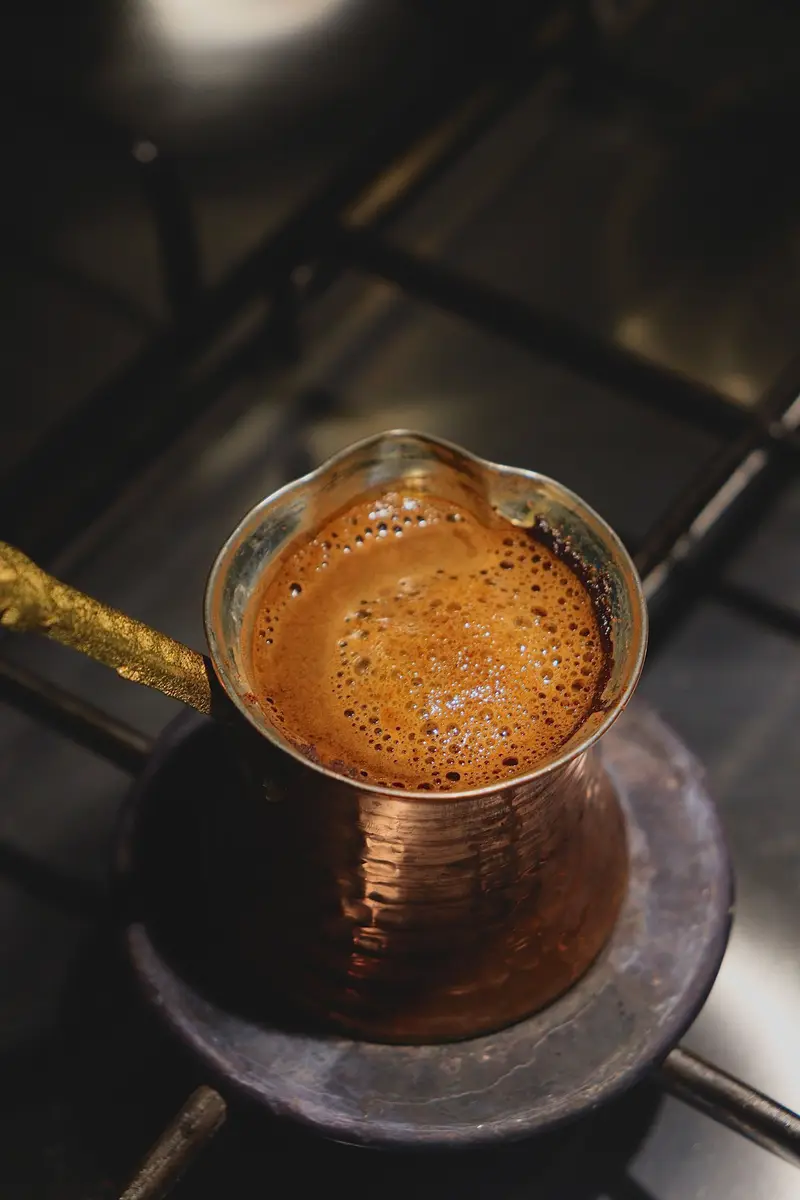
This post covers the category as a whole. We name brands only to cite their published specifications. We do not rank models, and this post contains no affiliate links.
What is an electric Turkish coffee machine?
It is a countertop appliance that automates the one hard part of the traditional method: taking the pot off the heat at the right second. You add ground coffee and, if you want it, sugar. The machine heats the mixture and stops by itself when the foam comes up.
The category is about twenty years old. Arçelik, the Turkish appliance maker, launched its Telve machine in June 2004, about two and a half years after it began market research for the product, and describes it as the world's first Turkish coffee machine. The company says the market for automatic Turkish coffee machines had grown to about 2 million units by the end of 2023. The same technology is sold under the Beko name in the United States, and other makers, Arzum among them, build machines on different designs.
These are different from a plain electric cezve, which is a small kettle-like pot with a heating element and no sensor. With one of those you still watch the foam yourself. Our guide to making Turkish coffee without a cezve covers that and other workarounds.
How do they work?
A heating element warms a small pot while a sensor watches for the foam rising. When the foam reaches the right point, the heat cuts off and the machine signals that the coffee is ready. Some models also fill the pot with water and stir the mixture automatically.
Manufacturers use their own names for each function:
| Function | What it does | Example of manufacturer naming |
|---|---|---|
| Brew detection | Senses the rising foam and stops heating | CookSense (Arçelik, Beko) |
| Overflow prevention | Cuts power before the pot spills | Anti-Spill (Arçelik, Beko) |
| Mixing | Stirs coffee into the water with a water jet or mixer | Spinjet (Arçelik, Beko); internal mixer (Arzum Okka) |
| Water dosing | Draws a measured amount from a tank | Automatic water intake |
| Alerts | Sound or light when the cup is ready | Varies |
There are two broad designs. In the first, you get a removable pot, the machine brews in it, and you pour into cups yourself. In the second, the machine brews in an internal chamber and dispenses straight into the cup. The Arzum Okka manual describes this second type: coffee goes into a brewing chamber, the cup sits under a nozzle, and the machine pours.
How much do they make, and how fast?
Home machines make between one and six cups per cycle and take about two to three minutes. Capacity and speed depend on the model, and the figures below come from the manufacturers' own pages.
| Published spec | Beko BKK 2300 | Beko TKM 8961 UC | Arzum Okka (manual V2.1) |
|---|---|---|---|
| Cups per cycle | 2 | 6 | 1 or 2 |
| Stated time | About 3 minutes for 2 cups | About 2 minutes for 6 cups | Not stated |
| Water | Not stated on the page | 1.5 L tank, automatic intake | Tank, automatic |
| Cup size settings | None listed | None listed | 52, 60 or 68 ml |
| Power | 670 W | 1200 W | 710 W |
| Voltage listed | 110–120 V | 120 V | 220–240 V in the manual we read |
Check the voltage before buying. Machines made for Turkey and Europe run on 220–240 V and will not work properly on a US outlet. Buy a model sold for North America and confirm the rating on the listing.
What do they do well?
They are consistent, quick and forgiving. The sensor removes the most common beginner failure, which is letting the pot boil over and losing the foam. They also free your hands, which matters when you are making coffee for guests.
- Repeatability. The same amount of water and the same stopping point every time.
- No boil-over. Overflow protection is the core feature of the category.
- Speed for several cups. A six-cup machine brews a tray's worth in one cycle.
- Altitude. The Okka manual says the machine detects the local boiling point on first use and can be reset after a move.
- Self-cleaning on some designs. The Okka manual describes a rinse cycle of about 45 seconds and a longer deep-clean cycle.
What do they do badly?
They take decisions away from you. On most machines you cannot slow the heating, lift the pot to let the foam settle and rise again, or spoon foam into each cup first. The machine has one idea of when the coffee is done.
- Limited control. Some models offer a slow-brew option, and the Okka manual describes an adjustable brewing temperature, but most give you a button and a result.
- Fixed batch sizes. You brew the amounts the pot or the cup settings allow.
- One sugar level per pot. This is true of a cezve as well, but a machine cannot split a batch.
- Materials. Pots on some models are plastic with a non-stick surface, as Beko's specifications state. Some people prefer metal.
- More to clean and maintain. Dispensing designs have a nozzle, mixer and waste tray. The Okka manual asks for the nozzle to be cleaned daily, and removable parts are hand-wash only.
None of these machines grind beans. You still need coffee ground to a powder, and the grind guide explains why that matters.
Should you buy a machine or a cezve?
Buy a cezve first if you are new to this coffee. It costs little, teaches you what good foam looks like, and works on any stove. A machine makes sense once you know you drink it often and want speed and consistency more than control.
| If you want | Choose |
|---|---|
| To learn the method and control every step | A cezve, also called an ibrik |
| The same cup every morning with no watching | An automatic machine |
| Coffee for six guests at once | A larger-capacity machine, or a large cezve and practice |
| A portable option for an office or dorm | A simple electric cezve or a small machine |
The full stovetop method is in how to make Turkish coffee, and the foam guide explains what the sensors are trying to capture.
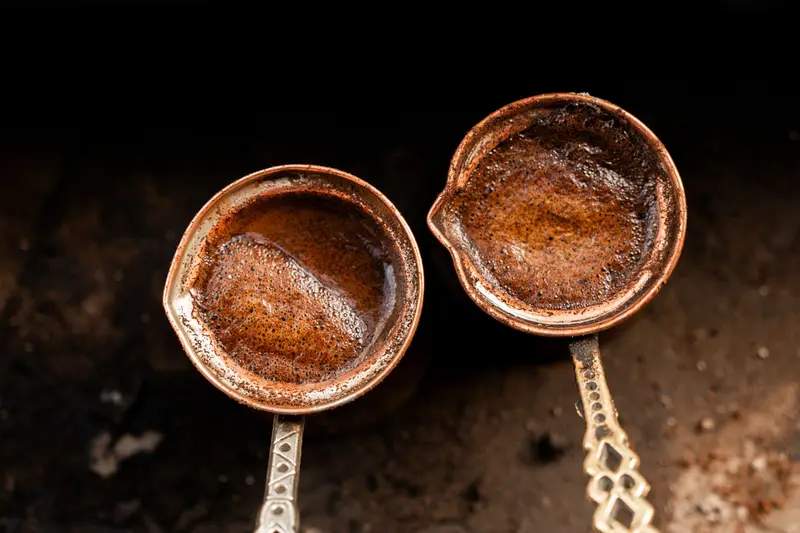
Do coffee shops use these machines?
Some do. Commercial versions exist: Arçelik describes its Telve Pro as a professional machine that brews nine cups at once with induction heating and can be connected to a water line. Other coffee shops brew by hand over a burner or in hot sand.
Our listings record the brewing method only when a source confirms it, machine-brewed included. If you run a coffee shop or restaurant and are weighing equipment, see adding Turkish coffee to your menu. To taste the hand-brewed version before deciding what to buy for home, find a place on our map.
Sources
- Arçelik: Telve 20th anniversary (launch June 2004, CookSense, Spinjet, Anti-Spill, patents)
- Arçelik Global: Telve Pro professional Turkish coffee maker
- Beko US: TKM 8961 UC Turkish coffee machine (product page and specifications)
- Beko US: BKK 2300 2-cup Turkish coffee maker (product page and specifications)
- Arzum Okka instruction manual, V2.1 (English)