Guide
Turkish vs Greek vs Arabic coffee: the cezve family compared
Turkish, Greek, Cypriot, Armenian and Bosnian coffee share one method: powder-fine coffee simmered unfiltered in a small pot and served with its grounds. Levantine Arabic coffee is the same method, usually with cardamom. Gulf qahwa is a different drink: lightly roasted, spiced, unsweetened and poured from a dallah. Yemeni tradition adds husk and spice brews.
By Ahmet Kırtok · Updated November 26, 2026 · 9 min read
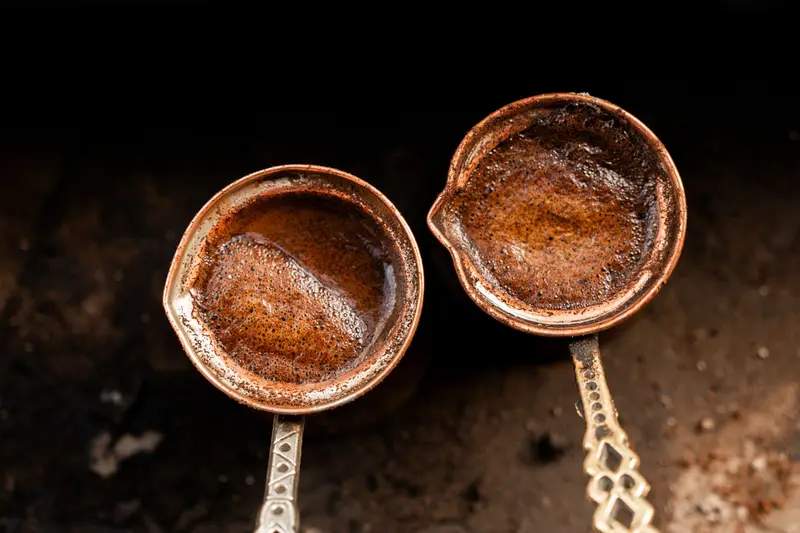
How do the cezve-family coffees compare?
Most of these coffees differ in name, spice and serving custom far more than in technique. The table sums up the typical practice in each tradition. Households vary, and every row has exceptions, so read it as a guide to what you are likely to be served.
| Tradition | Pot | Typical roast | Grind | Spices | Sugar practice | Foam | Serving |
|---|---|---|---|---|---|---|---|
| Turkish | cezve | Medium | Powder | Usually none | In the pot; ordered sade, orta or şekerli | Expected, prized | Small cup, water, often lokum |
| Greek | briki | Light to medium | Powder | None | In the pot; sketos, metrios or glykos | Expected, called kaimaki | Small cup, water |
| Cypriot | tzisves (Greek), cezve (Turkish) | Light to medium | Powder | None | In the pot | Expected | Small cup, water |
| Armenian | jazzve or srjep | Medium | Powder | Sometimes cardamom | In the pot; plain or lightly sweet | Expected | Small cup, often with pastry |
| Bosnian | džezva | Medium to dark | Powder | None | Commonly on the side, as sugar cubes | Spooned into the cup | Whole set on a tray; pot comes to the table |
| Levantine Arabic | rakweh | Medium to dark | Powder | Cardamom common | In the pot, or unsweetened | Varies; some boil it down | Small cup |
| Egyptian | kanaka | Medium to dark | Powder | Sometimes | In the pot, by named level | Expected, called wish | Small cup or glass |
| Saudi and Gulf qahwa | dallah | Light | Coarser, strained or settled in the pot | Cardamom; saffron or cloves in some regions | None; dates commonly served alongside | None | Tiny handleless cup filled a quarter full, refilled |
| Yemeni | Small pot; names vary | Light to medium, or husks only | Varies | Ginger, cardamom, cinnamon | Often sweetened | Not a feature | Small cups; includes qishr, a husk drink |
Two points explain most of the table. First, the Ottoman Empire carried one brewing method from the Balkans to North Africa, which is why six rows look so alike. Second, the Arabian Peninsula kept its own, separate style, which is why the Gulf row looks so different. The background is in our history of Turkish coffee.
What defines Turkish coffee?
Turkish coffee is powder-fine coffee heated slowly with cold water in a cezve (JEZ-veh), with sugar added in the pot if wanted, and served in a small cup with foam on top and a glass of water beside it. Spices are uncommon. The foam, called köpük, is the mark of a well-made cup.
You order by sweetness: sade (plain), az şekerli (a little sugar), orta (medium) or şekerli (sweet). The coffee arrives with water and often a piece of lokum. After the cup is finished, the grounds may be read as a fortune.
Türkiye nominated "Turkish coffee culture and tradition" to UNESCO's Representative List, where it was inscribed in 2013. Regional variations exist inside Turkey too, such as stone-mortar dibek coffee and brewing in hot sand. For the method itself, see how to make Turkish coffee and what is Turkish coffee.
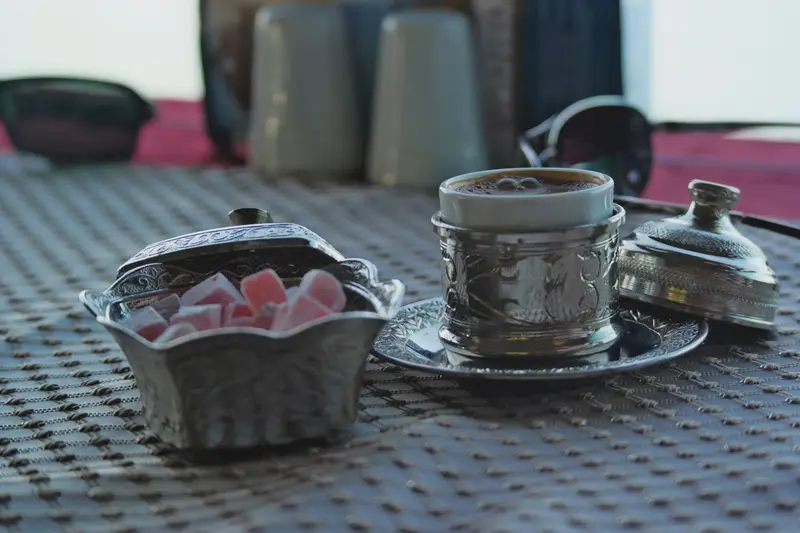
What is Greek coffee?
Greek coffee, ellinikos kafes, is made the same way in a pot called a briki (BREE-kee). The roast is often a little lighter than in Turkey, and the foam is called kaimaki. You order it sketos (plain), metrios (medium) or glykos (sweet), and it comes with a glass of cold water.
The name has a history. In the 1960s the drink was still generally called "Turkish coffee" in Greece. According to NPR's reporting from Athens, the name "Greek coffee" spread after the events in Cyprus in 1974, and Greek coffee brands promoted it in advertising in the early 1990s.
In a Greek coffee shop in the United States, ask for Greek coffee. It is the right name in that room, and you will get the same careful, foamy cup.
What is Cypriot coffee?
Cypriot coffee is the same small, unfiltered cup, and what it is called depends on who is serving it. Greek Cypriots generally call it Cypriot coffee, kypriakos kafes, and commonly call the pot a tzisves, a word related to cezve. In the north of the island the Turkish name is used, and the pot is a cezve.
Sweetness is chosen when you order, and a glass of water comes with it. As everywhere in this family, the coffee is brewed a cup or two at a time. Brewing in hot sand, which you may see in traditional coffee shops across the region, is covered in Turkish sand coffee.
What is Armenian coffee?
Armenian coffee is commonly called haykakan surj (Armenian coffee) or sev surj (black coffee), and it is brewed in a pot usually called a jazzve (JAHZ-veh) or srjep. The method matches the Turkish and Greek one. Some households add cardamom, and many do not.
It is drunk black, as the name sev surj says, and sweetness is chosen before brewing. It is commonly served with pastry such as gata or baklava. Armenian communities carried this coffee to Lebanon, Syria, France and the United States, and in American cities with large Armenian populations you will find it on bakery and restaurant menus under its own name.
How is Bosnian coffee different?
Bosnian coffee, bosanska kahva, uses the same pot and grind but a different sequence, and sugar stays out of the pot. The water is heated first in the džezva (JEZ-vah), then the coffee is added and the pot goes back on the heat until it foams. In one commonly described version a little hot water is poured off before the coffee goes in and added back at the end.
The service is distinctive too. The whole set arrives on a tray, traditionally round and copper: the džezva itself, a small cup (the traditional one is a handleless fildžan), sugar cubes, a glass of water and usually a piece of rahat lokum. You spoon some foam into the cup, pour your own coffee and refill from the pot as you talk.
Sugar is commonly taken on the side. One way is to bite off a small piece of the cube and let it melt in the mouth as you sip, and some people dip the cube in the coffee first. Bosnians are clear that this is Bosnian coffee, and the method and the tray give them good grounds to say so.
What is Arabic coffee in the Levant?
In Lebanon, Syria, Palestine and Jordan, everyday "Arabic coffee" or "Turkish coffee" (both names are used) is cezve-style coffee brewed in a pot called a rakweh (RAK-weh). The roast tends to be darker, and ground cardamom is often blended into the coffee.
Sweetness is chosen before brewing, as in Turkey. Common terms are sada (plain), mazbout (medium) and helweh (sweet). Some cooks bring the pot to a rise several times and let the foam subside, producing a strong cup with little foam. Others keep the foam. Both are traditional.
Egypt belongs to the same branch. There the pot is called a kanaka, the foam is the wish (the "face" of the coffee), and a cup without it is considered a failure, much as in Turkey.
The Levant also has a second coffee: a bitter, unsweetened, long-simmered brew served in tiny amounts at weddings, funerals and formal gatherings, especially in Bedouin and rural tradition. It is closer to the Gulf style below. In southeastern Turkey a related drink is known as mırra.
What is Saudi and Gulf qahwa?
Gulf qahwa (GAH-wah) is a separate tradition from cezve coffee. Beans are roasted lightly, ground more coarsely, boiled with cardamom, and poured clear from a long-spouted pot called a dallah into tiny handleless cups. It is unsweetened, often pale gold to light brown, and commonly served with dates.
UNESCO's 2015 decision inscribing "Arabic coffee, a symbol of generosity" describes the practice: beans lightly roasted in a shallow pan over a fire, pounded in a copper mortar, brewed in a large pot, then transferred to a smaller pot for pouring. It is made in front of the guests.
The etiquette is precise. According to that UNESCO decision and Abu Dhabi's culture authority:
- The most important or oldest guest is served first.
- The server holds the dallah in the left hand and offers the cup with the right.
- Each cup is filled only about a quarter full, and it can be refilled.
- A guest customarily drinks at least one cup and no more than three.
This element was inscribed on UNESCO's Representative List in 2015 for the United Arab Emirates, Saudi Arabia, Oman and Qatar, and extended in 2024 to include Jordan. If you have only had cezve coffee, expect something lighter in body, closer to a spiced infusion, with no grounds in the cup.
What is Yemeni coffee?
Yemen is where coffee drinking began, and its tradition is broader than one recipe. Yemeni households brew lightly roasted coffee with spices, and they also brew qishr (KISH-er), a drink made from dried coffee cherry husks, typically with ginger and often cardamom or cinnamon.
Qishr is lighter than bean coffee and low in caffeine, and it is often sweetened. Bean coffee is prepared in a pot and may be spiced in a similar way. Neither is built around foam, and the grind and straining vary by household.
Their menus usually combine traditional spiced pots meant for sharing with espresso drinks made from Yemeni beans.
Which name should you use?
Use the name the people serving you use. In a Greek coffee shop it is Greek coffee, in a Bosnian home it is Bosnian coffee, and in a Turkish one it is Turkish coffee. The method is a shared inheritance, and each community's name for it is correct in its own setting.
On this site, "Turkish coffee" appears in our name because it is the term most English speakers search for and the name this site has carried since 2004. In the directory, every place is listed under the style it names for itself. When we need one neutral phrase for the whole method, we say cezve coffee or ibrik coffee, after the pot.
Where can you taste the differences in the United States?
Seek out coffee shops and bakeries run by each community and order the house style by its own name. Many American cities have Turkish, Greek, Armenian, Bosnian, Lebanese, Palestinian, Syrian, Egyptian and Yemeni places within a short drive of one another, which makes side-by-side tasting easy.
The Turkish Coffee Map of America lists verified places and notes which style each one serves. To compare at home, start with one bag of powder-fine coffee and try it three ways: plain in a cezve, with a pinch of ground cardamom, and with the Bosnian two-step method. The cezve and ibrik guide covers the pots, how to serve Turkish coffee covers the table, and every term above is in the glossary.
Sources
- UNESCO Intangible Cultural Heritage: Turkish coffee culture and tradition (element 00645)
- UNESCO: Decision 10.COM 10.B.32, Arabic coffee, a symbol of generosity (2015)
- UNESCO: Decision 19.COM 7.B.55, Arabic coffee, a symbol of generosity, extended inscription with Jordan (2024)
- Abu Dhabi Culture (Department of Culture and Tourism): Gahwa, Arabic coffee
- Republic of Türkiye Ministry of Culture and Tourism: Turkish coffee culture and tradition
- Joanna Kakissis, Don't call it 'Turkish' coffee, unless, of course, it is, NPR The Salt (April 27, 2013)
- Saveur: This Michigan coffee shop is bringing Yemeni coffee to the masses (qishr and Yemeni spiced coffee)
- Dianne Kaiyoorawongs, Learning the art of Bosnian coffee, The Yale Globalist (June 8, 2015)
- UNESCO Intangible Cultural Heritage: Arabic coffee, a symbol of generosity (element 02111)
- Farshid Emami, Coffee and Coffeehouses in Ottoman and Safavid Lands, 1500-1800, Khamseen, University of Michigan (2021)
Questions people ask
Is Greek coffee the same as Turkish coffee?
In method, yes: both are powder-fine coffee simmered in a small pot and served unfiltered with foam. Greek coffee is often roasted a little lighter and is ordered with Greek sweetness terms. The separate name spread after 1974 and reflects national identity.
What is the difference between Turkish coffee and Arabic coffee?
It depends on which Arabic coffee. In the Levant and Egypt it is the same method, usually with cardamom. In Saudi Arabia and the Gulf, qahwa is lightly roasted, spiced, unsweetened, free of grounds and poured from a dallah into tiny cups filled a quarter full.
Does Turkish coffee have cardamom?
Usually not. Classic Turkish and Greek coffee is unspiced. Cardamom is common in Levantine and Gulf coffee and appears in some Armenian households. If you like it, add a small pinch of ground cardamom to the pot with the coffee.
Why do Bosnians say their coffee is different?
Because the steps differ. In the Bosnian method the water is boiled before the coffee goes in, some is set aside and added back, sugar is served as cubes on the side, and the pot is brought to the table on a tray for you to pour yourself.
Which of these coffees has grounds in the cup?
Turkish, Greek, Cypriot, Armenian, Bosnian, Levantine and Egyptian coffee are all served with grounds that settle at the bottom, so you leave the last sip. Gulf qahwa is poured clear from the dallah, and the cup holds no sediment to speak of.